

GDP is a myth that is entrenched in the deeper psyches of people
Economics is the study of the production and consumption of resources and the altering of society by the act. It covers monetary exchange, trade, commerce, and anything that shapes material transactions in today’s world. The modern economic theory is characteristic of a simple rule that governs the requirement and acquirement of any product, i.e., demand and supply.
The demand graphs and supply graphs are inversely proportional to each other, and the price of any item is reciprocally/directly proportional to the demand and inversely proportional to supply.
But beyond that, the supply and demand of essential requisites of living or urgency is what also drives money growth, along with monetary tunnels of passive income these are the two ways where we see exponential growth of ownership of money and wealth.
For instance, A country has very few doctors, way below the needed count of healthcare professionals, since the demand for doctors is huge, and the supply is low, the valuation of the medical profession in monetary terms i.e, their salaries will be better as compared to someone who writes for a living, since everyone is a writer with this advent of AI.
Similarly, entrepreneurs invest in a myriad spaces, in stocks, bonds, commodities, mutual funds, gold, etc, this creates passive income outlets, and thus money gets added with incremental business of a family economy.
Talent supersedes all areas of economic limitations because then your fame writes all the checks and creates passive income, but economic assessment is a game of averages, and not to target the top 1–10% behaviors but on an average how society behaves in their conscience or earns out of their goods and services. For instance, even in general, writing can be hard for many to create a sustainable career. We do have some famous authors who get loads of money in royalties, which might be more than any medicare professional in the world, but that’s just them and not all.
A self-centric model
The foundation of Economics is Built on a flawed model. It assesses value in material terms which is not an issue, but it ascribes the relationship of humans with the material to be self-centric rather than self-beneficial. The economy by itself as a design is not sustainable and even if it tries to go the greener way it has its baggage that follows it.
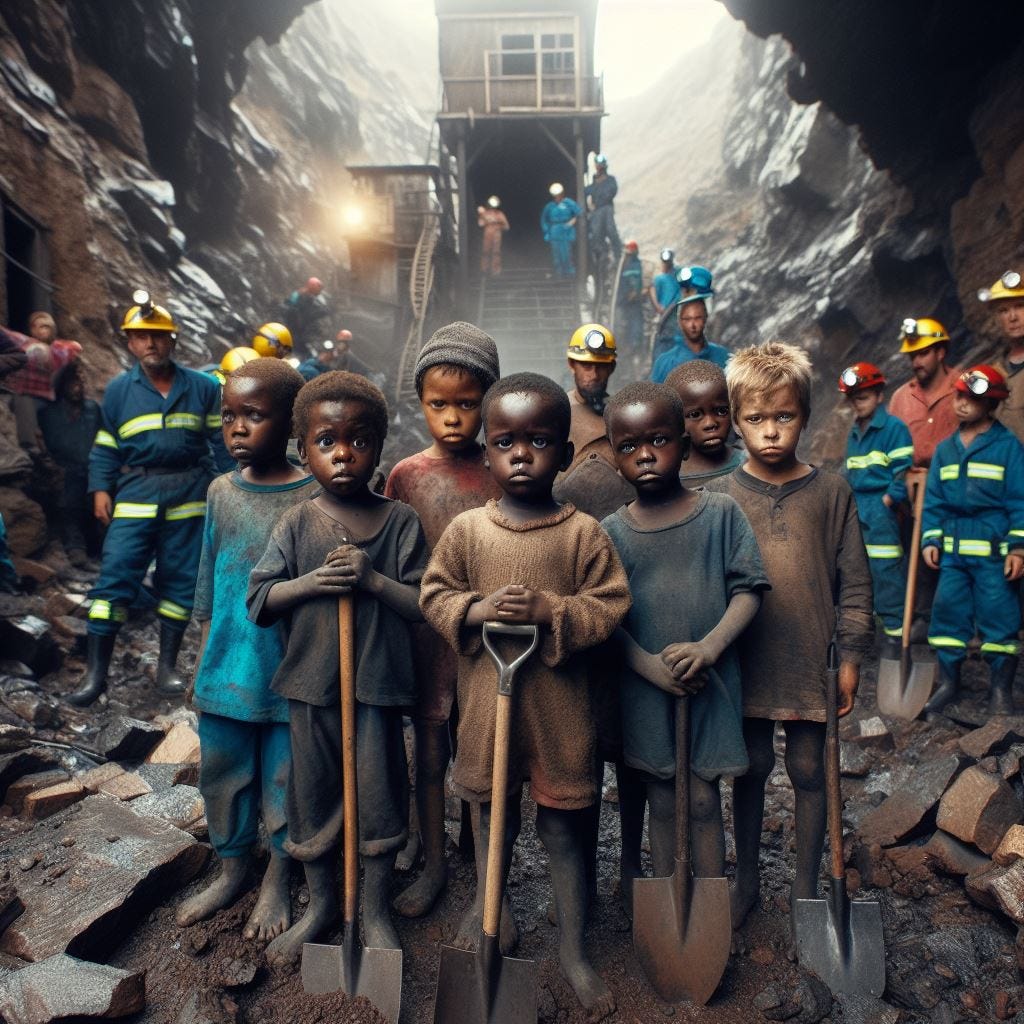
For example, EVs are not at all sustainable even today; they pollute the environment more than they reduce carbon footprint. Electricity and practices to extract lithium and cobalt, which are used in making batteries, are not at all environmentally friendly. Moreover, lithium mines are engrossed with child slaves who are forced to work in African nations like Ghana. Combined, the amount of water, smoke, and radiation risk that EV demands pose via electricity causes more strain on the environment than reducing carbon accumulation.
Another example has to be the rise of e-commerce websites that do delivery work of products from one place to another. The many layers of packaging, the cellophane, and plastics that come with it are causing more risks to the environment. Each hard paper box is made from tree leaves, and the packaging is made with nonbiodegradable materials mainly polythene.
We get these things cheaply, but this is the enigma that modern economics creates, dissociating us from our agents of production. Marx precisely talked about this phenomenon where intermediary agents and customers are trained to be blind, even if the production violates all norms of climate safety mechanisms.
The myth of anything Gross Per Capita is not good either
The biggest hoax that exists in understanding the economy is this Gross; the term ‘Gross’ is misleading and very deceptive. ‘Gross Domestic Product’ or GDP is a very misleading growth of economic output and welfare; GDP increases even if the nation is suffering a crisis; it replicates the human mechanization and self-sufficiency model we have created where production and consumption are more of a commoditization of material. But the thing is even misery can elevate GDP, for instance, the nation can produce bombs, increase defense spending, decrease welfare capital, and do all things against its people and still have elevated GDP.
Per capita paradox
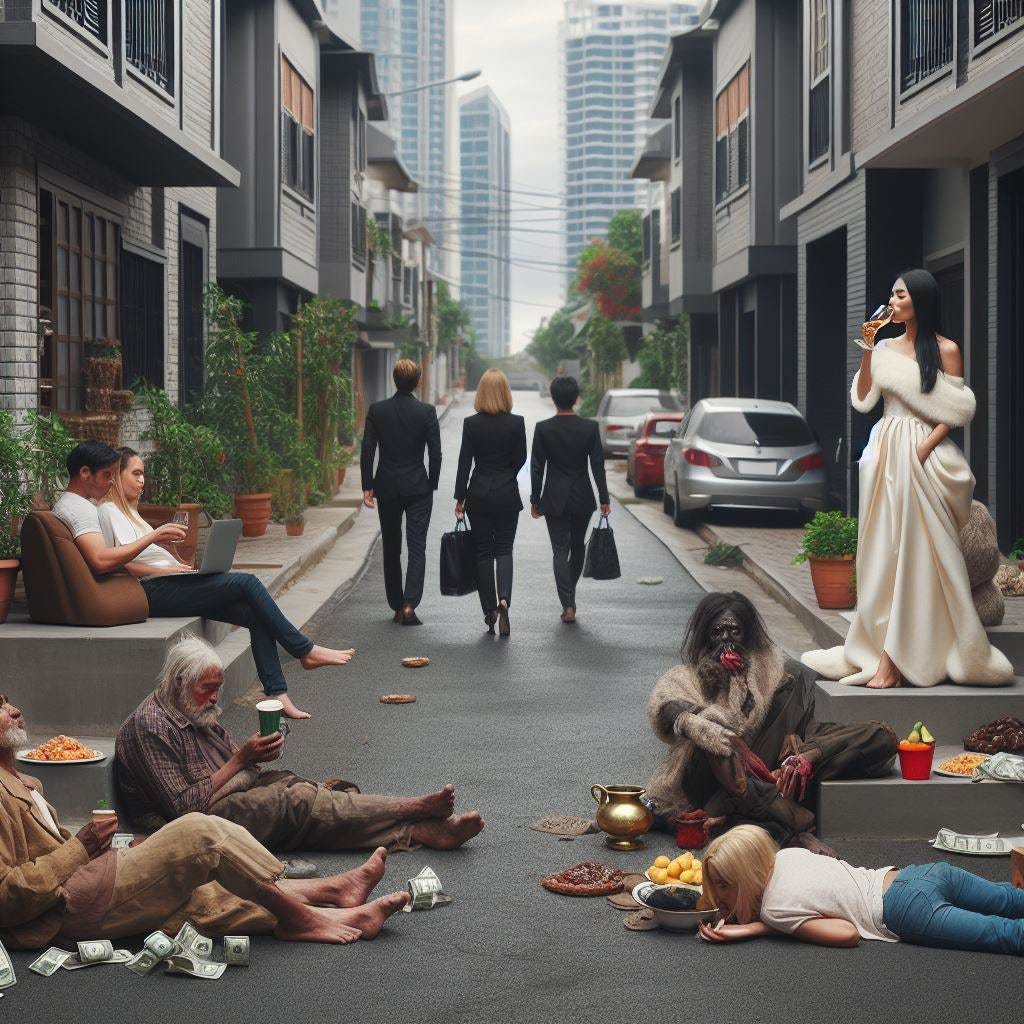
If GDP is in its fuller terms, whether nominal, which is in dollar rates, or PPP terms, which are normalized with local currency metrics, its per capita numbers are often seen as a determinant of people’s welfare, but even that is a hoax. Per capita is simply an estimation of GDP on a per-person basis, which is completely wrong. The per capita reflects and projects a skewed picture that makes money an equitable product, which does not consider nations have severe wealth inequalities, which are growing to extremes in many developing and developed countries.
WTOs high handedness
World Trade Organization exists as a monitoring agency that makes sure trade happens on equitable grounds, barring some specific regional deals (like China’s RCEP) or FTAs (Free Trade Agreements) between nations. WTO pushed many nations to adhere to market opening protocols, or else the developing country in question would face a dearth of certain commodities and items. There were no specific specialized clauses to protect nascent economies that were still grappling with the destruction of colonialism. FTAs with developed economies were approved faster while developing nations were forced to withdraw tariffs,
Moreover, unfair tactics used by Western Powers to remain as neo-colonialists added to the decline and deceleration of economic equality. Many nations used WTO as a facilitator, especially many African nations, which were exploited by the European powers. Even today, they are squeezed off of their natural resources. For instance, France today levies colonial tax in its provinces Benin, Burkina Faso, Côte d’Ivoire, Guinea, Mali, Niger, Senegal, Togo, Cameroon, Central African Republic, Chad, Congo, Equatorial Guinea, and Gabon.